Materials & Care
Mindful Metals
Find out more about the different metals I use to create your jewellery and how their story started before they become part of yours…
-
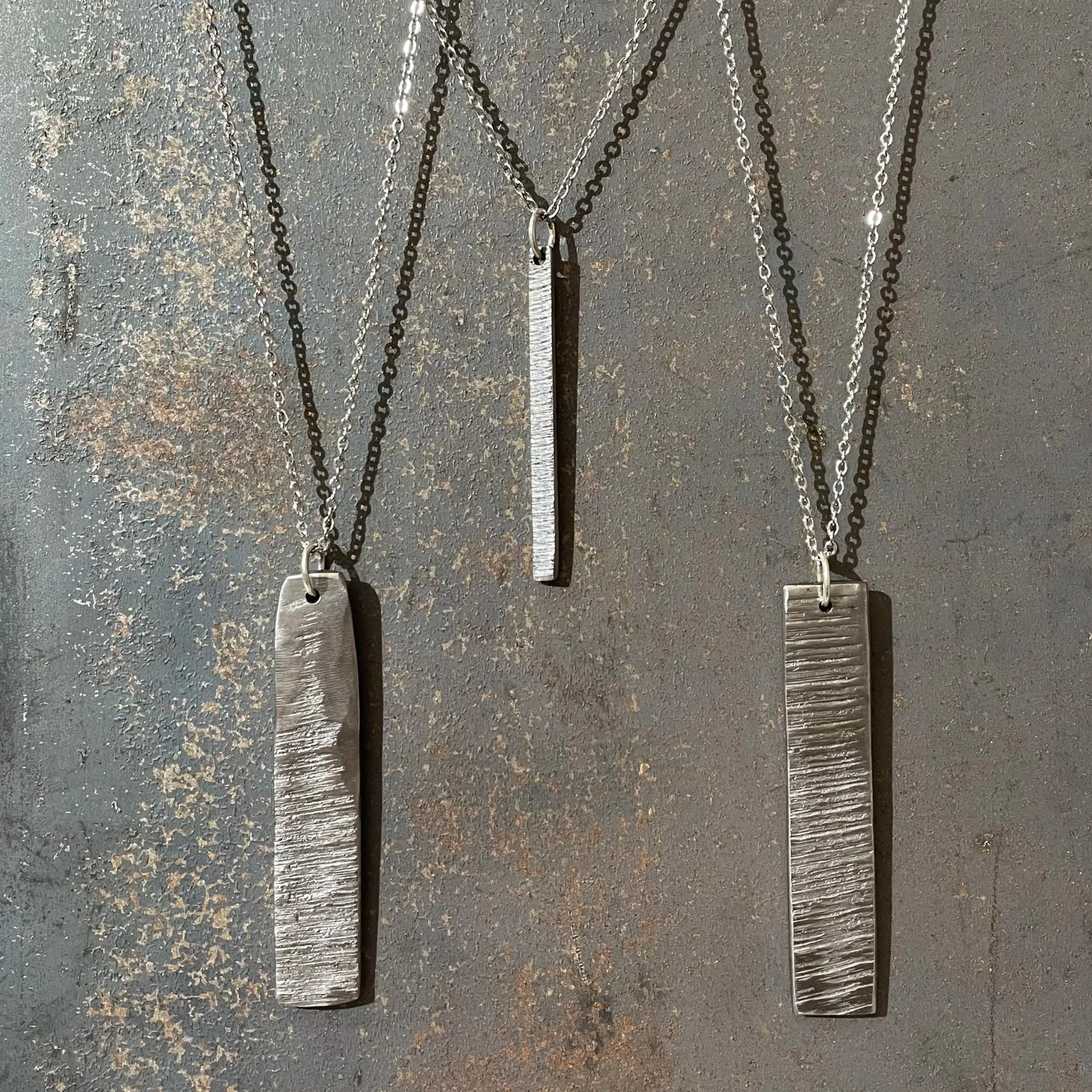
Steel at Second Spring is predominantly mild carbon steel that has been recovered from industrial fabrication processes; this is why there are often deep cut grooves and textured features in pieces made from it so that the earlier chapters of its story can be seen and admired.
Mild steel is a ferrous metal composed predominantly of iron and carbon. Other trace elements will also be present to enhance different working properties.
Mild steel isn’t typically used for jewellery because of its tendency to rust when exposed to moisture which can cause skin irritation. The best way to prevent this is to keep it dry and/or use a protective coating.
On occasion, I have access to stainless steel offcuts too; stainless steel does not rust and is often used in the jewellery industry for individuals with skin allergies to other metals.
Steel jewellery does not require hallmarking.
For further care tips, take a look further down this page.
-
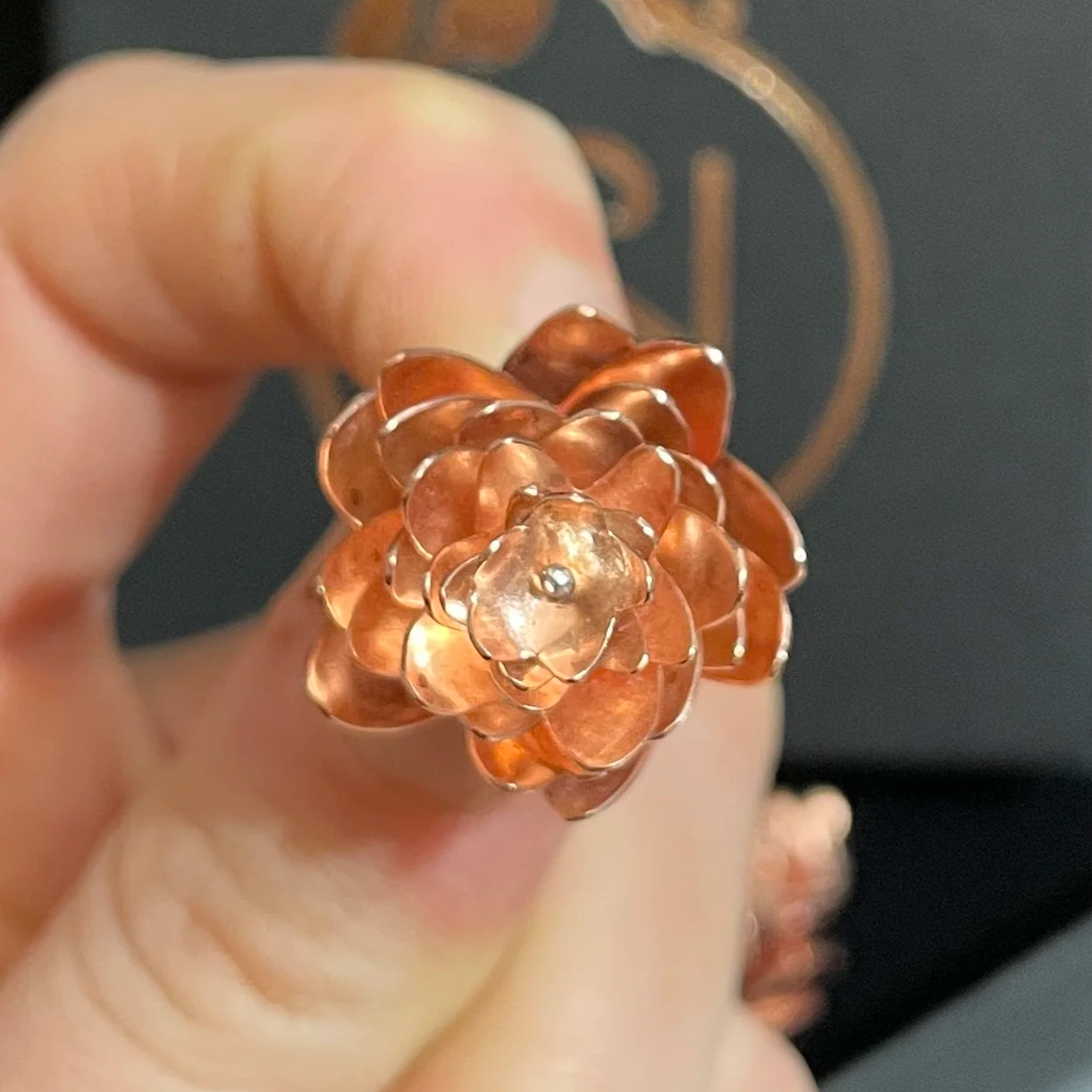
Copper at Second Spring either comes from offcut copper sheet after it has been cut and trimmed to make worktops, panels and decorative features of commercial and domestic furniture. I also use the very pure copper cores from scrap electrical cable.
A very malleable metal and great conductor of heat, copper is used by many jewellers for prototyping designs prior to using more expensive metals. It is a beautiful metal in it’s own right and has been used in jewellery for thousands of years.
Copper has natural antimicrobial properties and low chemical reactivity. If moisture becomes trapped between the skin and tight fitting copper jewellery, surface oxidation may occur which can transfer a temporary greenish tint on skin (this is not the same as an allergic reaction).
Copper shine can easily be restored. See the care tips further down this page for more information.
Copper jewellery does not require hallmarking.
-
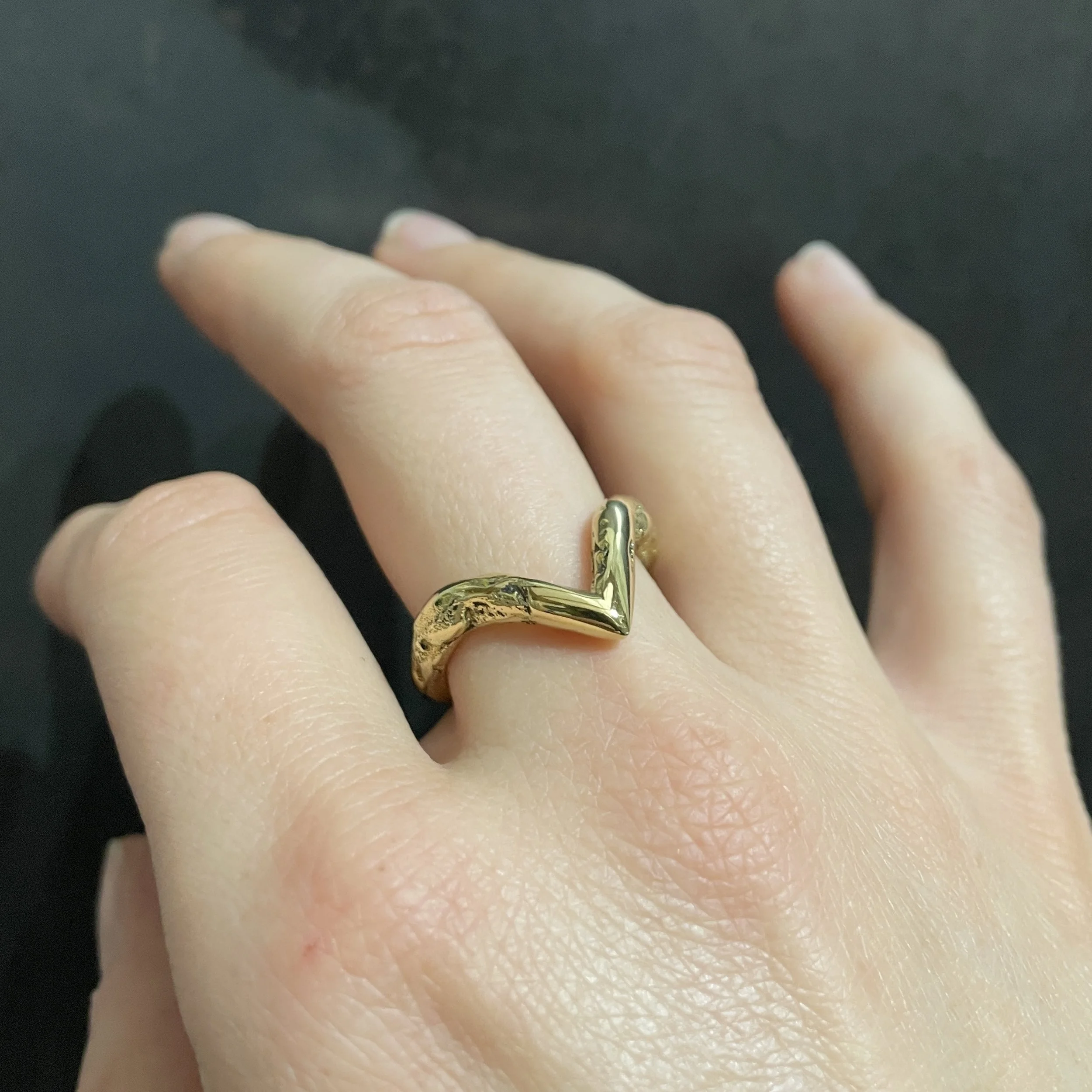
Brass at Second Spring is recovered from industrial fabrication processes where it has been used to make furniture, art or sculptural installations. The brass I use to make jewellery comes from trimmed sheet which I reshape, melt or cast into forms to use in jewellery designs.
Brass is a yellow-gold coloured alloy of copper and zinc, that has been used in jewellery making for thousands of years. It has attractive working properties similar to copper and, in my opinion, looks stunning whether bright and shiny or with an aged patina.
If moisture becomes trapped between the skin and tight fitting brass jewellery, surface oxidation on the metal may create a temporary greenish stain on the skin (this is not the same as an allergic reaction). Brass shine can easily be restored; see the care tips further down this page for more information.
Brass jewellery does not require hallmarking.
There is a common misconception that brass jewellery is poor quality, in part due to the market being flooded with cheap mass produced plated jewellery that has been misleadingly labelled. Such mass produced items often aren’t even made from brass, and are instead a mix of unspecified metals (nickel, zinc, tin) as fillers. When plating wears off and exposes the metal beneath, the jewellery can look less than pretty and cause skin irritations.
Brass jewellery isn’t for everyone but it can be a very cost effective way to purchase a unique hardwearing piece when those made from higher priced metals are out of budget.
I will never mislead or mislabel the materials I make my jewellery from so that you can make an informed choice about the best option for you.
-
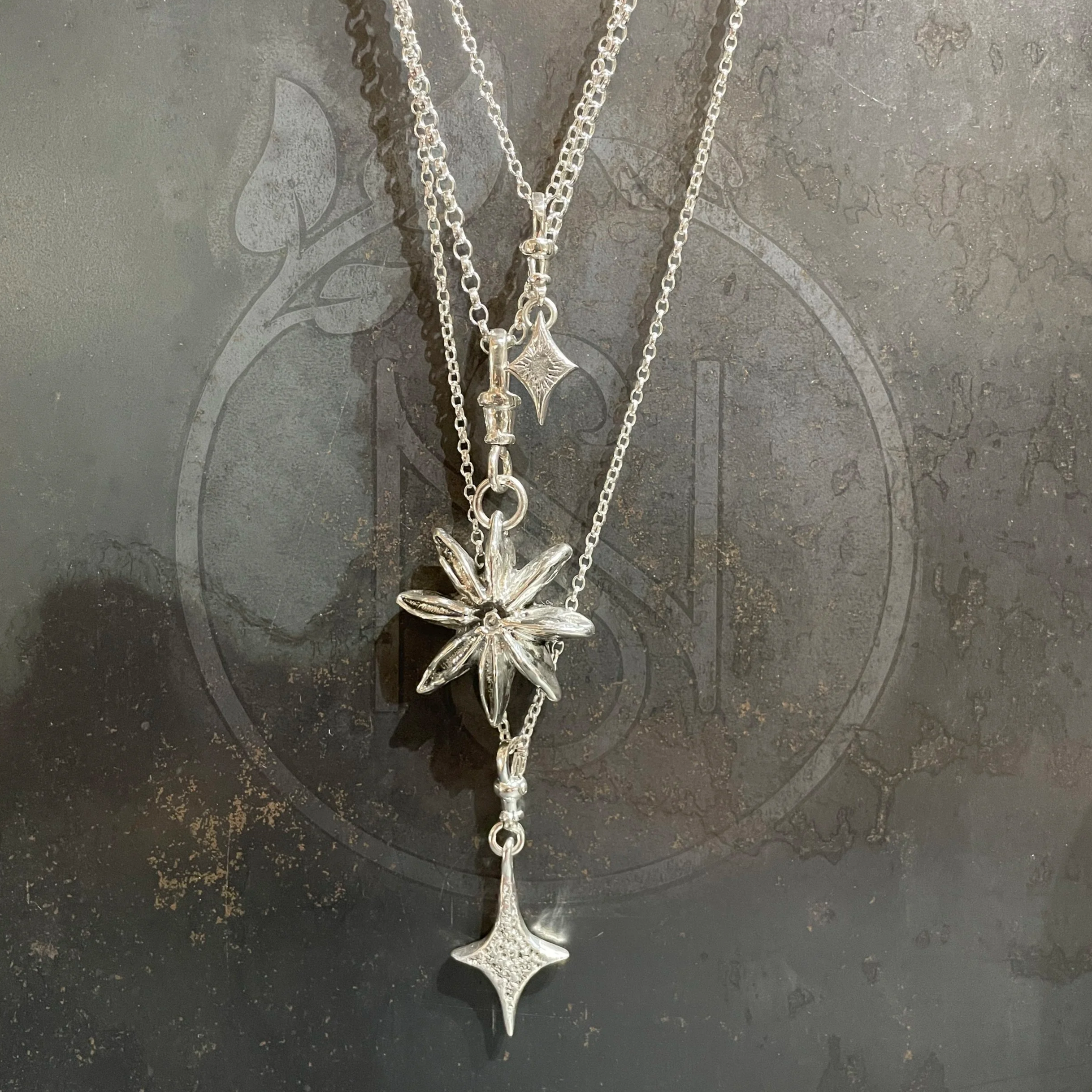
Silver at Second Spring comes from recycled sources; either from old/broken jewellery that I have sourced or been donated, or recycled silver purchased from legitimate bullion supplier, Cooksongold.
Silver is a white coloured ‘precious’ metal with a very long history in jewellery making. Its lustre, malleability and ductility make it very attractive to work with. It doesn’t react with moisture to produce surface oxidation in the way that copper and brass do, but it does tarnish when exposed to sulphur in the air; a property which is often exploited to create beautiful contrasting textures and finishes between the resultant black/brown surface colour compared to non-tarnished bright silver areas. Unwanted surface tarnish can easily be polished away. See the care tips further down this page for more information.
Different purity grades of silver are available; I predominantly use 925 sterling silver which is comprised of 92.5% silver and 7.5% copper (copper is alloyed into it to make it more hardwearing than pure silver alone).
Sterling silver is subject to UK hallmarking legislation when the weight of it exceeds 7.78 grams.
With good care, your pieces will last their own re-purposed lifetime.
Many metals develop a surface patina over time as the surface reacts with chemicals in the air or substances it may come into contact with. The degree of this will be influenced by your wearing habits, for example, if sprayed with perfumes, worn in the sea/shower etc. In some cases, a temporary greenish stain may appear on the skin. Some people like to see changes in patina over time, but if it’s not your thing, it’s easy to maintain a bright shine.
Expand on the tips below to help you when choosing and caring for your pieces.
Second Season, Lasting Style
-
Dry your jewellery off if it gets wet
Avoid spraying with perfumes, hairsprays, lotions etc. to minimise chemical contact
Avoid wearing at the gym or in the sea (salt water, sweat and chlorine can accelerate surface reactions)
Give it a little buff with a soft cloth before putting it away
-
For silver, copper, brass pieces, you could use mild soap and water or lemon juice and bicarbonate as a low cost household solution. Make sure you rinse and thoroughly dry it off afterwards. DON’T use this option for steel jewellery as it is likely to accelerate corrosion.
There are lots of different metal polishes available which are inexpensive and last a long time. They have the added benefit of providing some surface protection between polishes.
Small polishing cloths that are already prepped with polish can be found quite cheaply in local cobblers or online. They are mess free and last ages.
For steel jewellery the best care is keeping it dry and avoiding abrasives. If you do notice any tiny brown spots appearing, they can be removed with fine wire wool.